Save the Date: World Sepsis Day Supporter Meeting at ESICM LIVES 2018 in Paris
WSD_Supporter_Meeting.jpg

We will hold our next World Sepsis Day Supporter Meeting on October 23rd at ESICM LIVES 2018 in Paris, France. Main topics will be a summary of this year’s main GSA activities, an outlook for 2019, as well as a look back on the 7th World Sepsis Day and the 2nd World Sepsis Congress, our free online congress bringing knowledge about sepsis to all parts of the world.

  • Tuesday, October 23rd

  • 12:15 to 14:15 (lunch break of ESICM)

  • Meeting Room: within the congress venue, exact location to be announced at a later date

  • Snacks will be provided

  • A preliminary agenda will be available at a later date as well

Participation is free of charge and open to everyone. If you want to attend, please sign up here.

The European Society of Intensive Care Medicine (ESICM) is an association of individual persons. Founded in March 1982 in Geneva, Switzerland, ESICM is a non-profit making international association. ESICM supports and promotes the advancement of knowledge in intensive care medicine, in particular the promotion of the highest standards of multidisciplinary care of critically ill patients and their families through education, research, and professional development.

Marvin Zick
World Sepsis Day Symposium at Houston Methodist Hospital, Texas
 

The Houston Methodist Hospital in Houston, Texas will host multiple events for World Sepsis Day on September 13th and 14th, 2018.

There will be a booth display with giveaways and a poster contest on September 13 from 9am to 1pm at the Houston Methodist Hospital Crain Garden.

The symposium will be held on September 14th. This activity has been planned and implemented in accordance with the essential areas and policies of the Accreditation Council for Continuing Medical Education, Texas Nurses Association, and American Nurses Credentialing Center’s Commission on Accreditation, and American Association for Respiratory Care. Physicians, advanced acute care nurse practitioners, physician assistants, nurses, respiratory therapists, administrators, and quality officers will be able to earn 4.0 CME/CNE/CRCE’s.

More than 1.5 million people get sepsis each year in the U.S. At least 250,000 Americans die from sepsis each year and about 1 in 3 patients who die in a hospital have sepsis. The mission of this event is to promote awareness of sepsis to the community and healthcare team with the goal of improving patient care.

Marvin Zick
The GSA Welcomes Baxter as the Newest Sponsor of World Sepsis Day
Baxter_wide.png
 

Today, the Global Sepsis Alliance is excited to welcome Baxter as the newest sponsor of World Sepsis Day.

A global leader in acute care and multi-organ support therapies, Baxter is at the forefront of advancing new technologies and revolutionizing treatment for critically ill patients around the world. One advancement is Baxter’s commitment to delivering new therapies in continuous renal replacement therapy (CRRT) and sepsis management options. Today, Baxter offers a set for blood purification able to perform CRRT and remove cytokines and endotoxins at the same time. 

Every day, millions of patients and caregivers rely on Baxter’s leading portfolio of critical care, nutrition, renal, hospital, and surgical  products. For more than 85 years, they have been operating at the critical intersection where innovations that save and sustain lives meet the healthcare providers that make it happen. With products, technologies, and therapies available in more than 100 countries, Baxter’s employees worldwide are now building upon the company’s rich heritage of medical breakthroughs to advance the next generation of transformative healthcare innovations. 

Patients in the ICU can face serious complications, like sepsis, that lack proven effective treatments – which is why Baxter is committed to furthering innovation in critical care and advancing options for patients in the ICU. We are proud to sponsor World Sepsis Day and be a part of the global discussion around this life-threatening condition.
— Reaz Rasul, General Manager of Acute Therapies, Baxter

We thank Baxter for becoming a sponsor of World Sepsis Day and look forward to working together. 

Marvin Zick
World Sepsis Day 2018 Only One Month Away – Inspiration, Ideas, Material, and the 2018 WSD Event Poster

Today is August 13th, meaning the 7th World Sepsis Day is only one short month away! Below, we have collected some ideas and inspiration for you to host the perfect WSD event on September 13th, along with materials and instructions how to be featured on the 2018 WSD Event Poster.


PROMOTIONAL MATERIAL FOR WORLD SEPSIS DAY 2018

Please go to the toolkit section - you will find everything you are looking for, and more. If there is something missing, or you have ideas for additional material, please get in touch. We are currently refreshing the infographics, updating the content and giving them a new look. The new infographics will be released in September, shortly before World Sepsis Day.

Please visit our shop for ordering WSD articles for your special World Sepsis Day event.


The 2018 WSD Event Poster

Like every year, we will once again feature all events held for World Sepsis Day on the 2018 WSD Event Poster - so make sure to take some pictures! On September 14th, we will have a form ready for you to upload your pictures and descriptions of your event, together with a deadline for submission. After we have created the poster, you will be able to download it, print it yourself, as well as to order printed copies.


Inspiration and Ideas for World Sepsis Day 2018


EVENTS FOR MEDICAL PROFESSIONALS

  • Set up sepsis awareness stalls for staff with sepsis quizzes and sepsis exhibitions in the entrance area of your institution/hospital
  • Offer special educational sepsis trainings for staff around World Sepsis Day
  • Public viewing/streaming of the 2nd World Sepsis Congress on September 5th and 6th, 2018 as an educational program for physicians, nurses, healthcare workers, and even patients
  • Organize conferences, symposia, round-table discussions, etc.
  • Show the "What Is Sepsis? - sepsis explained in 3 minutes" - video at your event (English /// Spanish /// Italian  /// Turkish /// German /// French and Portuguese coming soon)
IMG_9736-min.jpg
IMG_0200-1-min.jpg
IMG_1597-min.jpg
med professionals 2.JPG
med professionals 1.jpg
med professionals 3.jpg
 

PUBLIC EVENTS

  • Sport events are a great opportunity for people to watch or participate, even spontaneously. Organize a sport event like a city marathon, a bicycle tour, a volleyball tournament, a sepsis team run, a zumba event, or another sport activity - possibilities are endless. Hand out information leaflets along the way. Make sure lots of people see you, for example by planning the route through a town square, or similar.
  • Organize a family afternoon, together with sepsis survivors, if possible. Set up stalls and decorate the area to attract people. Think about having some music or performers and something fun for the kids like face-painting or sepsis-related handicraft work.
Cycling-min.jpg
Public event 3.JPG
 
Public event 4.jpg
 
  • Organize a sepsis photo exhibition, collecting photographs of activities in the fight against sepsis, for example academic, cultural or governmental events or sepsis patient stories. You can take inspiration from the one from our friend and supporter Luis Gorordo Delsol from the Juarez Hospital in Mexico for World Sepsis Day 2017.
 
sepsisphotoexhibition.jpg
 
  • Set up a pink picnic. Pink Picnics are social events where pink is used to signify relation to World Sepsis Day. This can include pink salads or cupcakes, BBQ treats, beverages, plates, other table decor...and whatever you can think of! Use pink balloons for decoration. See our toolkits for both event and pink picnic material.
 
pink+picnic-min.jpg
  • Organize a Gala Event or a special dinner - this is a glamorous opportunity to raise awareness for sepsis in your network, including for fundraising. For example, check out the Sepsis Heroes Gala Event by the Sepsis Alliance.
 
Sepsis+Heroes-min.png


IN YOUR COMPANY / Institution

in your company.JPG
 

ONLINE

Show Your Support on Your Website, Social Media Presence, or Email signature:

  • Embed the "What Is Sepsis? - sepsis explained in 3 minutes"-video on your website and/or share it on social media (English /// Spanish /// Italian /// Turkish /// German /// French and Portuguese coming soon)
  • Share the new WSD Infographics on social media, on your website, or send them directly to colleagues - the infographics are currently being updated and will be available September 2018 (before WSD).
  • Tweet about or at World Sepsis Day, using the hashtag #wsd18, #WorldSepsisDay, #stopsepsis, or #savelives
  • Share a WSD infographic on your Facebook, Twitter, or Instagram page or story, or put up a post mentioning @WorldSepsisDay
  • Temporarily add a pink banner or a button to your website, or set up a microsite informing your visitors about WSD
  • Temporarily add ‘September 13 is World Sepsis Day – Stop Sepsis, Save Lives’ to your email signature
  • Organize a Twitter chat, a webinar, a Reddit AMA, a Facebook Live, or a Periscope
 

WHY IS WORLD SEPSIS DAY IMPORTANT?

World Sepsis Day is held on September 13th every year and is an opportunity for people worldwide to unite in the fight against sepsis. Sepsis accounts for at least 8 million deaths worldwide annually. Yet, depending on country and education, sepsis is known only to 7 – 50 % of the people. Likewise, it is poorly known that sepsis can be prevented by vaccination and clean care and that early recognition and treatment reduces sepsis mortality by 50 %. This lack of knowledge makes sepsis the number one preventable cause of death worldwide.


WHY SHOULD YOU PARTICIPATE IN WORLD SEPSIS DAY?

World Sepsis Day is a favorable moment to increase public awareness for this poorly acknowledged health care disaster, but also to show support and solidarity with the millions of people who lost their loved ones, or, as sepsis survivors, suffer from long-term consequences of sepsis. World Sepsis Day is a great opportunity to remind the public, media, national, and international healthcare authorities, healthcare providers, and healthcare workers, policy makers, and the governments that there is an urgent need to increase and improve education on the facility, regional, national, and international level. The easiest way to support World Sepsis Day: Share the link for signing the World Sepsis Declaration with your colleagues, families, friends, and everyone that should be informed about sepsis.


We wish you good luck in preparing your World Sepsis Day event and thank you for your valuable contribution in the fight against sepsis!

If you couldn't find what you were looking for, please get in touch

Marvin Zick
What Is Sepsis? (Sepsis Explained in 3 Minutes) Now Available in Turkish - Sepsis Nedir?

Our video 'What Is Sepsis? (sepsis explained in 3 minutes)' is now available in Turkish, easily explaining what sepsis is, and how to identify and treat it. Please share it with your loved ones - especially your Turkish speaking friends - it could save their lives!
A special thanks to everybody who helped translating this video - more languages will follow over the course of the summer.
The original English version, as well as the Spanish and Italian versions are embedded below as well.


To share these videos, please use these links:

Turkish: https://youtu.be/oDBJ-do24Rs
Turkish: http://bit.ly/SepsisExplainedTurkish

English: https://youtu.be/AEGUCpxwAlE
English: http://bit.ly/SepsisExplained

Spanish: https://youtu.be/1-pW9BpBQLM
Spanish: http://bit.ly/SepsisExplainedSpanish

Italian: https://youtu.be/dEL__o6WJTI
Italian: http://bit.ly/SepsisExplainedItalian

If you are interested in the file, for example for offline playback at a local event, please get in touch

Marvin Zick
2nd World Sepsis Congress Only One Month Away
 

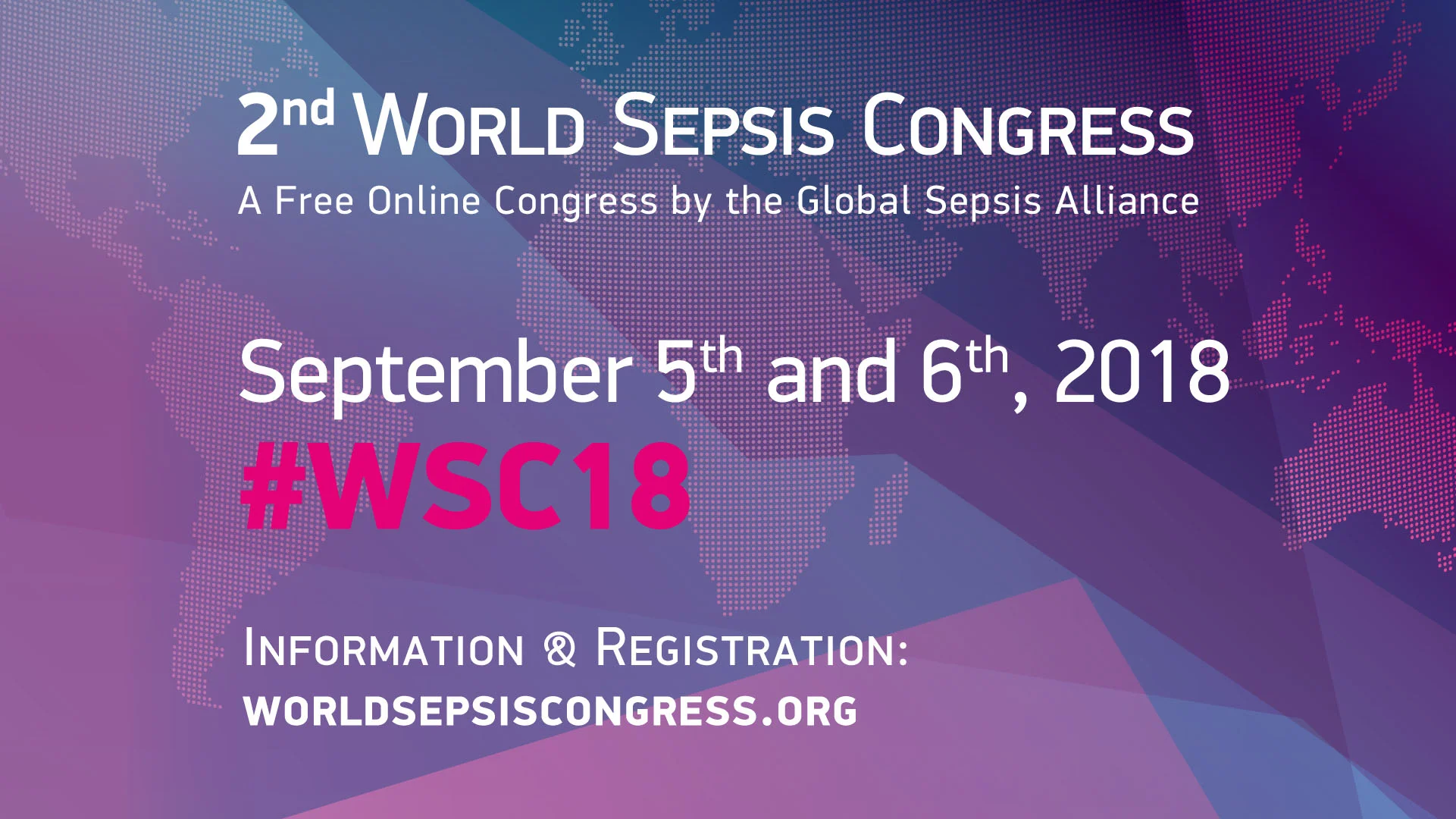
In exactly one month, on September 5th and 6th, the 2nd World Sepsis Congress will start - have you signed up yet?
Participation is free of charge and only requires a short registration here as well as an internet connection. 
Over the course of two days and 17 sessions, over 100 renowned experts from all around the world will give presentations on all aspects of sepsis, including a panel discussion with sepsis survivors, national and global awareness strategies, evidence-based treatment, the newest research, and much, much more. 
The congress will be held in English and you can participate live from wherever you are.

Marvin Zick
Rory's Regulations: Association Between the New York Sepsis Care Mandate and In-Hospital Mortality for Pediatric Sepsis
Rory.jpg
 

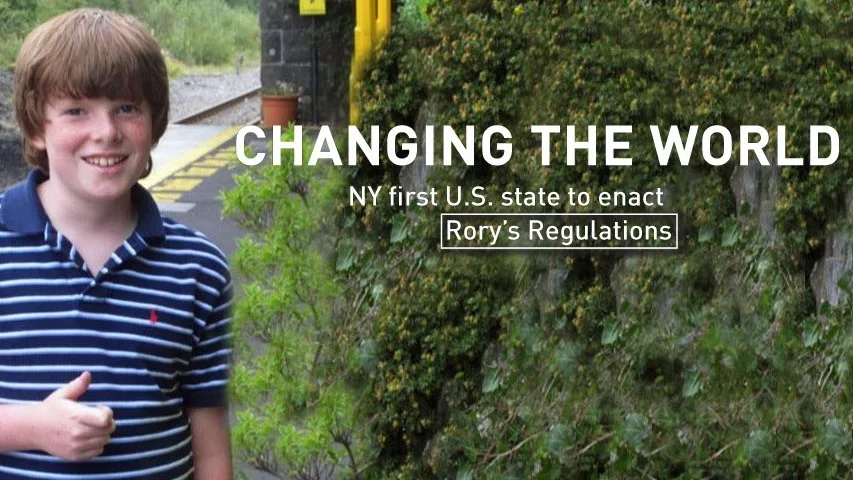
In 2012, Rory Staunton, a 12-year-old from New York City, tragically died after developing sepsis from a seemingly innocent scrape to his arm during basketball practice. Many believe his death could have been prevented if his case of sepsis had been recognized and treated earlier.

His parents, Orlaith and Ciaran Staunton, turned their grief into action, founding the Rory Staunton Foundation for Sepsis Prevention

In 2013, New York State issued a statewide mandate for all hospitals to develop protocols for sepsis recognition and treatment, dubbed ‘Rory’s Regulations’.

In April 2017, the New York Times featured an article with data from the New York State Department of Health, saying that Rory’s Regulations have saved close to 5,000 New Yorkers so far. However, this analysis looked at adult patients with sepsis.

Now, researchers have analyzed how children with sepsis fared in hospitals in New York State. The study, published this Tuesday in the Journal of the American Medical Association (JAMA), found that children who had received recommended treatment within 60 minutes were more likely to survive the medical emergency known as sepsis. According to the study, which included 1,200 New York State children, completion of the sepsis protocol within one hour was associated with nearly one-third lower risk of death. The effect of completing any given part of the protocol within an hour – for example, giving fluids but not testing for infection or giving antibiotics – did not significantly change the risk of death, the researchers noted, suggesting the greatest benefit comes from accomplishing the entire bundle quickly.

The study has its limitations. In particular, sepsis had to be recognized to even get into the dataset – although recognition of sepsis in the first place might be more important than the rapid treatment of sepsis when it is recognized. It’s also possible that the patients who were treated faster were already more likely to survive - maybe that’s what it made it easier for doctors and nurses to diagnose their sepsis earlier.

Nevertheless, this study is incredibly encouraging. It adds to a growing number of studies finding that early sepsis treatment is beneficial, and importantly extends these findings to children. It is widely accepted that rapid sepsis recognition and treatment saves lives, and after all, no child should die from a treatable infection.
 

Learn More about Sepsis

Marvin Zick
Interdisciplinary Sepsis Symposium in Chicago on September 10th and 11th, 2018
Interdisciplinary Sepsis Symposium.jpg
 

On September 10th and 11th, the Carle Illinois College of Medicine, in partnership with OSF Healthcare, the University of Chicago Medicine, the Illinois Interdisciplinary Health Sciences Institute, and the Carle Foundation, are hosting the Interdisciplinary Sepsis Symposium.

Sepsis is the leading cause of death in hospitals in the United States, the leading cause of readmission, and the most expensive hospital condition. More people die from sepsis every year than deaths due to prostate cancer, breast cancer, and HIV all combined together.

This symposium focuses on bringing many sepsis researchers from different disciplines together with funding government agencies, government leaders, and funding foundations. The goals are

  1. To provide the audience with a one stop shop to learn about the latest sepsis research, government initiatives, and funding opportunities
  2. To enable sepsis experts and government agencies/funding foundations to start to develop a plan to innovatively improve sepsis care over the next two decades.

Three of the top five sepsis researchers in the entire world are giving keynote talks (Jean-Louis Vincent, Derek Angus, and Richard Hotchkiss). 18 other sepsis speakers from six different areas will also be giving talks – clinical, big data, novel devices, immunology, education/training, and biomarkers. In addition representatives from CMS, the CDC, BARDA, NIGMS, NIAID, NHLBI, and various funding foundations will be attending.
 

Marvin Zick