Five weeks in a coma, sepsis, amputation – and yet the path back to life.
A true story about fighting spirit, support, and the power of never giving up.
■ From athlete to intensive-care patient in just a few days
I was healthy, athletic, conscious about nutrition, and even worked in the sports field. There were no warning signs, no pre-existing conditions, and yet sepsis hit me completely unexpectedly. It all started with the flu (Influenza A). “Get some rest,” they said. But a few days later my condition deteriorated dramatically: pneumonia, hospital, then immediate artificial coma.
■ Five weeks in a coma – life hanging by a thread
The influenza developed into a superinfection, leading to multiple organ failure and eventually sepsis. I spent five weeks in a coma. My chance of survival: at most 50 percent. Between life and death – and I had no idea.
■ Waking up to the hardest news
When I woke up, it was clear: my legs could not be saved. Necrosis on my toes and on my right lower leg made amputation unavoidable.
I couldn’t walk or stand, not even put weight on my legs. In early neurological rehab, I realized: I had to start from scratch.
■ Learning again what once was natural
Breathing without a ventilator, swallowing, eating, holding a spoon, moving in bed, I had to relearn it all.
My brain needed a reset. Even though I am right-handed, at first I could only do many things with my left hand. It felt strange, frustrating, but every little step forward was a victory.
■ Amputation – a paradoxical relief
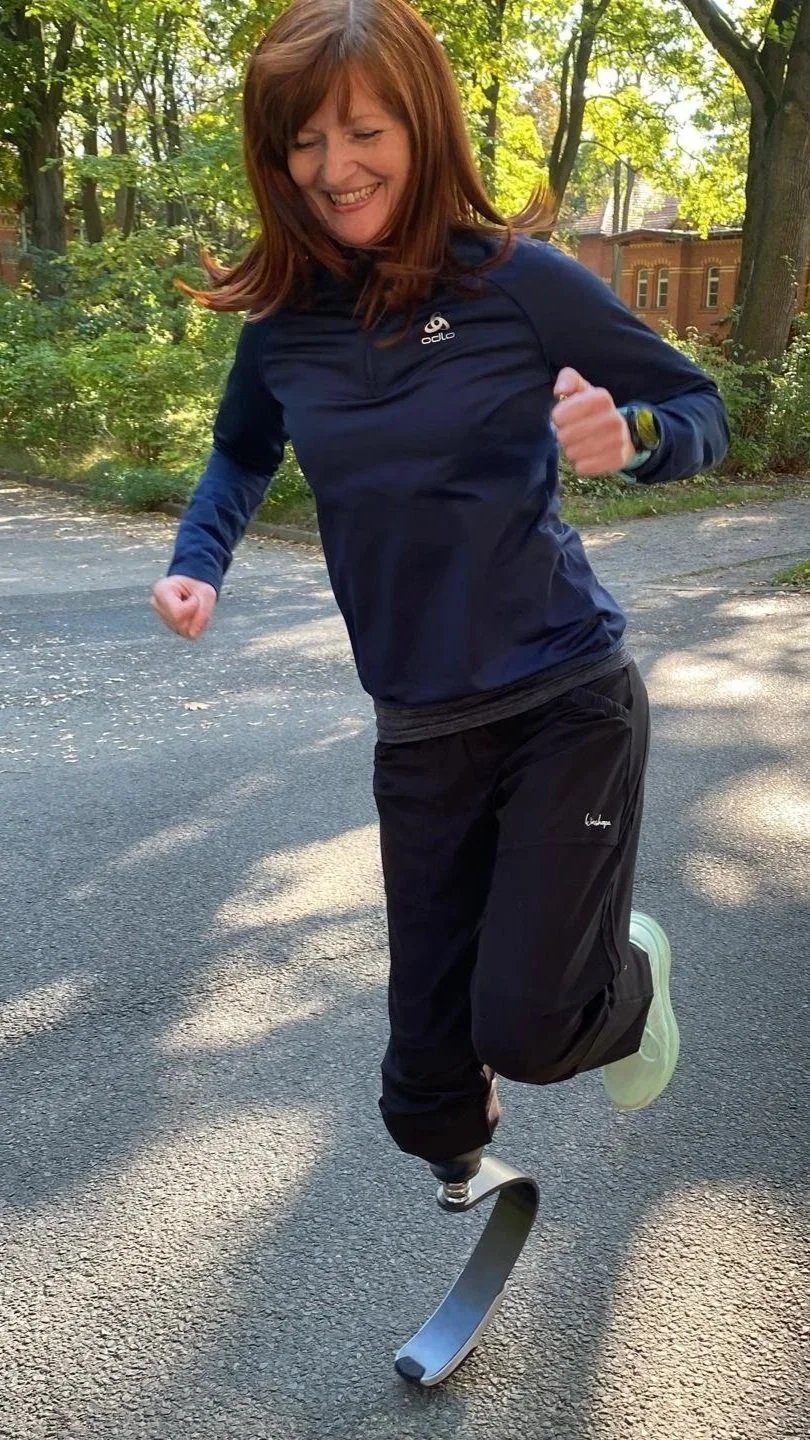
The real turning point came with the amputation. As difficult as this step was, from that moment, I felt energy again. I wanted to fight. But my body was weakened, and I had lost almost 30 kilos while in the coma. Before a prosthesis was possible, I had to painfully rebuild muscle. During that time, I also lost half of my hair, a side effect of the life-saving medication. Hard to bear, but not a reason to give up.
■ “You’ll never be able to do that again!” — Yes. I will.
I often heard what supposedly wouldn’t be possible anymore. That only fueled my determination. My stubbornness helped me keep going. I wanted to prove that my life goes on.
■ Carried by others when I faltered
Without my family, friends, and colleagues, I wouldn’t have made it. They supported me when I didn’t have the strength.
The support I received at my workplace was also crucial. Through inclusion officers, disability representatives, and the inclusion office. Only through them did I learn what kind of support exists. For those affected, this is an important message: Don’t hesitate to accept help.
■ My life today – different, but strong
Today I have my life back, my child, my family, my sport, my job. Not everything is like it used to be, but much is possible again, and that’s what matters.