Vanessa’s Sepsis Story: From a Suspected Stomach Bug to Septic Shock
Friday, February 16, started just like any other day. I did my early morning workout, got the kids off to school, and went to work. That evening, we had a family dinner, and everything seemed normal. But as night fell, I started to feel achy and unwell. With winter break approaching, I thought, Great timing – getting sick right before a break.
That night, the chills hit me violently. By Saturday morning, I woke up with severe stomach pain and nausea. I chalked it up to a stomach bug and hoped it would pass in 24 hours. I stayed in bed most of the day, barely keeping anything down. Reluctantly, I canceled plans to see a Broadway play, thinking sleep would cure me. I didn’t even check for a fever; I didn’t think it was that serious.
By Sunday, I was still sick, and my mother insisted I go to urgent care. My husband drove me there, though walking had become difficult. I assumed I was just weak from being unwell and hungry.
At urgent care, my blood pressure was 65/44, and I was running a fever. They gave me Tylenol and were preparing to call an ambulance, but I still didn’t grasp the severity. I asked my husband to take me to the hospital instead. Every bump in the car sent waves of pain through my body.
In the ER, they immediately wheeled me past the waiting room. I thought it was luck. But after initial assessments, I noticed the nurses and doctors wearing ICU badges. CT scans were done, and I couldn’t pass urine, so a catheter was inserted. The doctors began prepping me as a suspected sepsis case. I couldn’t understand it; I was healthy. I just had a stomach bug.
As medications were started to stabilize my blood pressure, my pain increased. I was told surgery was imminent, though the source of infection was unknown. A central line was inserted into my neck to monitor and administer treatment. The surgeon spoke kindly but firmly, explaining that the scans were inconclusive and they needed to explore my abdomen.
I went into the OR, went under anesthesia, and had an arterial line inserted to monitor my blood pressure. That night, I underwent a laparotomy, and 700 ml of infected fluid was removed. They couldn’t determine the root cause, but fortunately, my organs were unharmed.
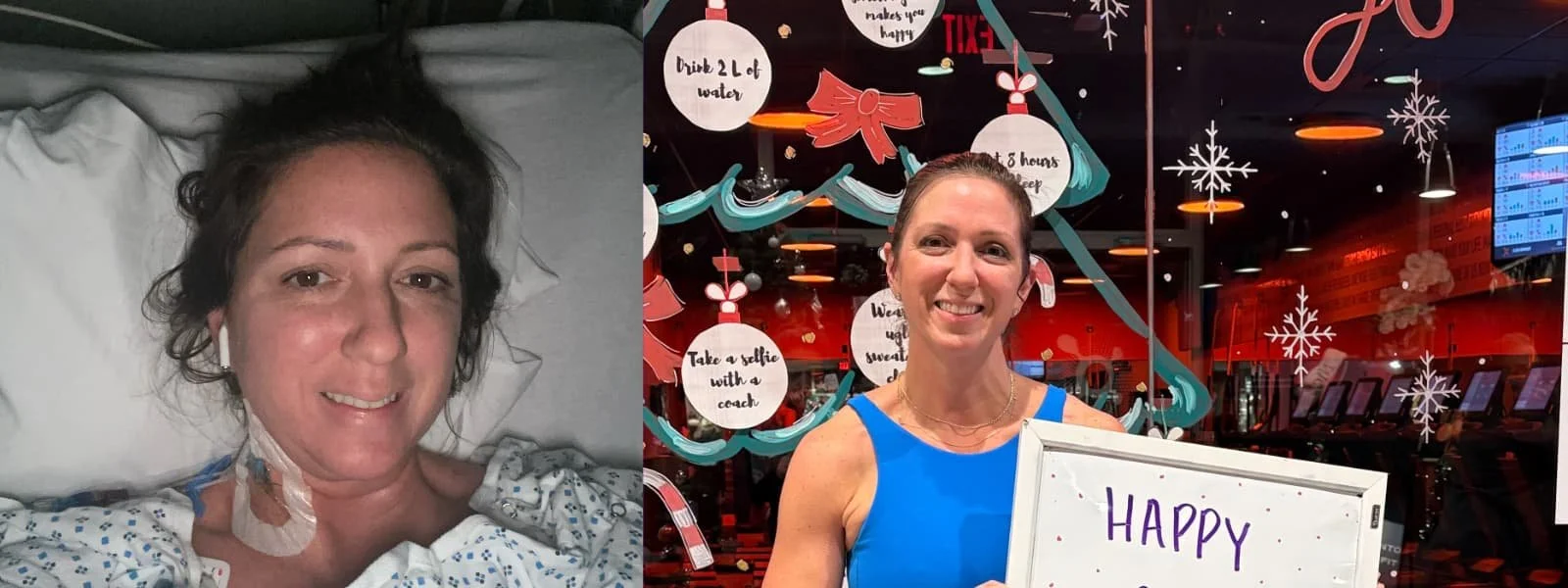
I woke up the next day intubated, my mind cloudy but aware of where I was. My husband was there saying everything was great, but I could imagine what he was seeing. I was extubated the following day. The week in the CCU was intense: I was on numerous IV antibiotics, in pain, with a giant incision and a drain. Walking was a slow shuffle, cords trailing behind me, yet I pushed myself. My brain was foggy, but I had to get home to my three children, who had no idea how sick I was. The view of a playground from my window broke my heart; I wanted to be there with them.
The nurses and doctors were incredible. They held me steady as I learned to walk again, checked my vitals, listened to my belly, and encouraged me to talk about my kids to distract from the pain. Their support helped me stay focused on recovery. When I was finally discharged, I was ecstatic to go home.
Home life was different. The first floor of my house became my world: a recliner, a commode, and the humming of life around me. The first night brought a fever spike and intense pain. I even began writing down notes for my family, fearful of returning to the hospital and not coming home. The following day, I stabilized, but recovery was slow. My once-sharp mind struggled with focus and multitasking. My strong, active body could barely walk. Emotionally, I swung from anger to sorrow.
Despite everything, I channeled my energy into recovery. I can now laugh about the stomach bug that almost killed me. I share my story widely and have encouraged at least three close friends to seek care when in pain; each had appendicitis successfully treated with simple surgery. I also rediscovered a love of exercise, which I truly believe helped save me.
Today, when I look at my giant scar and feel the creeping question of “Why me?”, I try to find perspective. I survived. My doctors recognized the signs of sepsis, and now so do I.
The article above was written by Vanessa Sparacio and is shared here with her explicit consent. The views in the article do not necessarily represent those of the Global Sepsis Alliance. They are not intended or implied to be a substitute for professional medical advice. The whole team here at the Global Sepsis Alliance and World Sepsis Day wishes to thank Vanessa for sharing her story and for fighting to raise awareness for sepsis.